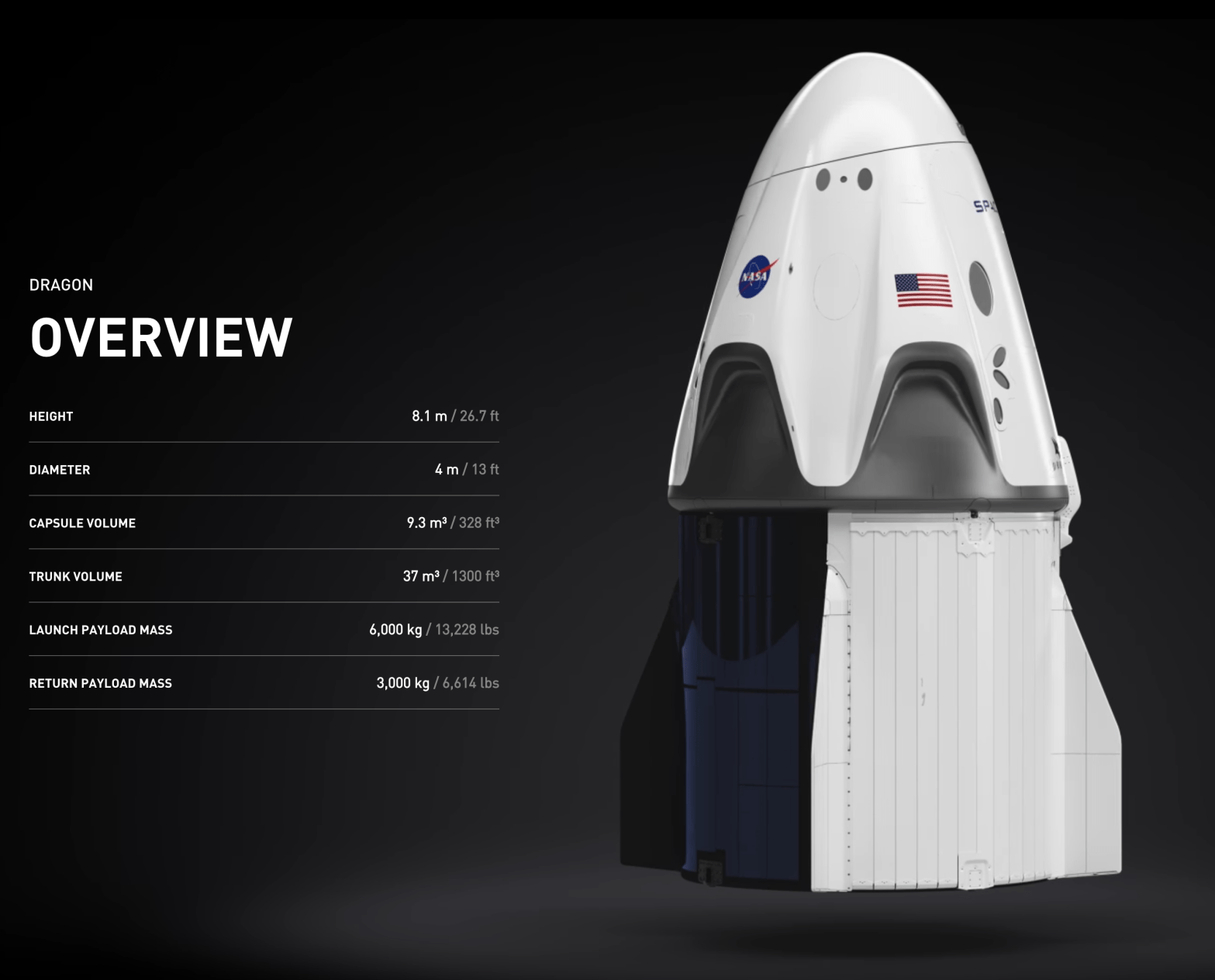
The second attempt at getting the SpaceX Dragon spacecraft into orbit with a crew of 2 American astronauts will take place again today. The launch is scheduled for 3:22pm from launch pad 39A at the Kennedy Space Center in Florida.
The weather, once again, will play a crucial role in determining whether or not the Falcon 9 rocket with the Dragon capsule on top will get off the launch pad today.
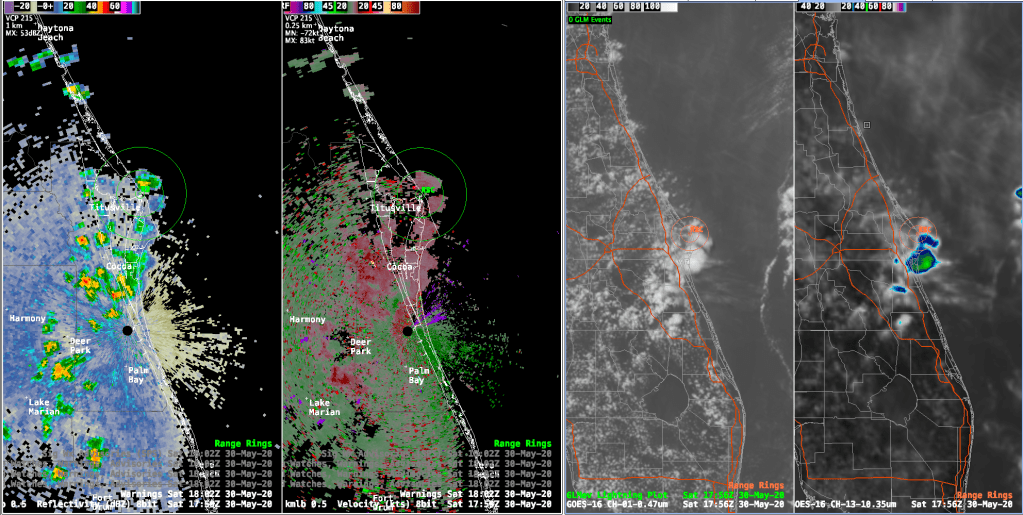
The first challenge will be the weather around the launch pad at launch time. Currently there are showers and thunderstorms developing within a 10 mile radius of the launch site (the bullseye inside the 1 mi, 5 mi and 10 mi range rings I’ve set up). This has the potential to be an issue if these thunderstorms persist up to launch time. It would be especially bad if these storms are inside the 10 mi range ring very close to launch time. This could cause the launch to be aborted. Further, if there are storms with a lot of lightning near the launch area this will cause electric fields to develop that could spark lightning if the rocket is launched. Presently very little lightning has been detected in the area of the Kennedy Space Center. Let’s hope it stays that way.
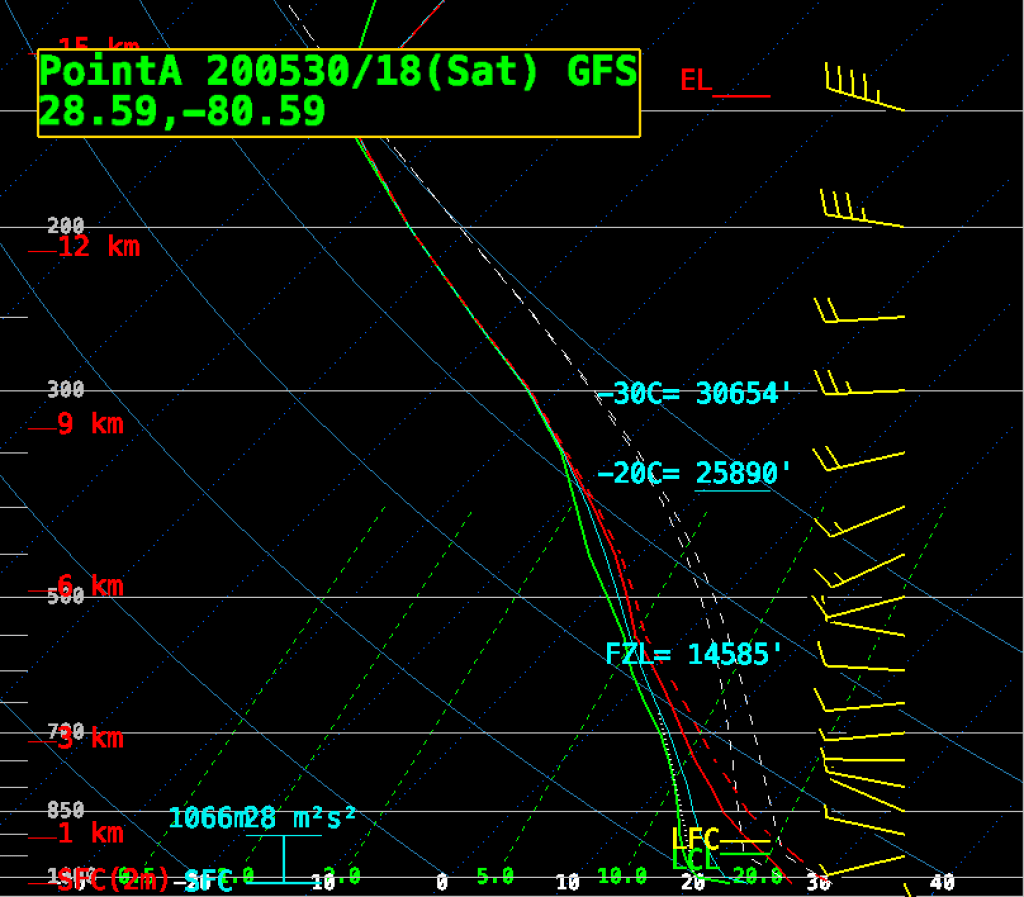
In addition to the surface weather we also have to look up to see if the winds at higher levels of the atmosphere are favorable for a launch. Spacecraft cannot launch into strong upper level winds due to the massive dynamic stress the craft experiences during its initial ascent through the atmosphere. Luckily the upper level winds are forecast to be 25 kt or less all the way up through about 10 miles during the rockets ascent phase.
Another major consideration is weather downrange from the launch site. The rocket will achieve earth orbit about 9 minutes after lift off. The trajectory of the rocket (shown below) takes the spacecraft along the eastern seaboard of the US, skirting past Newfoundland, across the North Atlantic Ocean to just south of the United Kingdom.
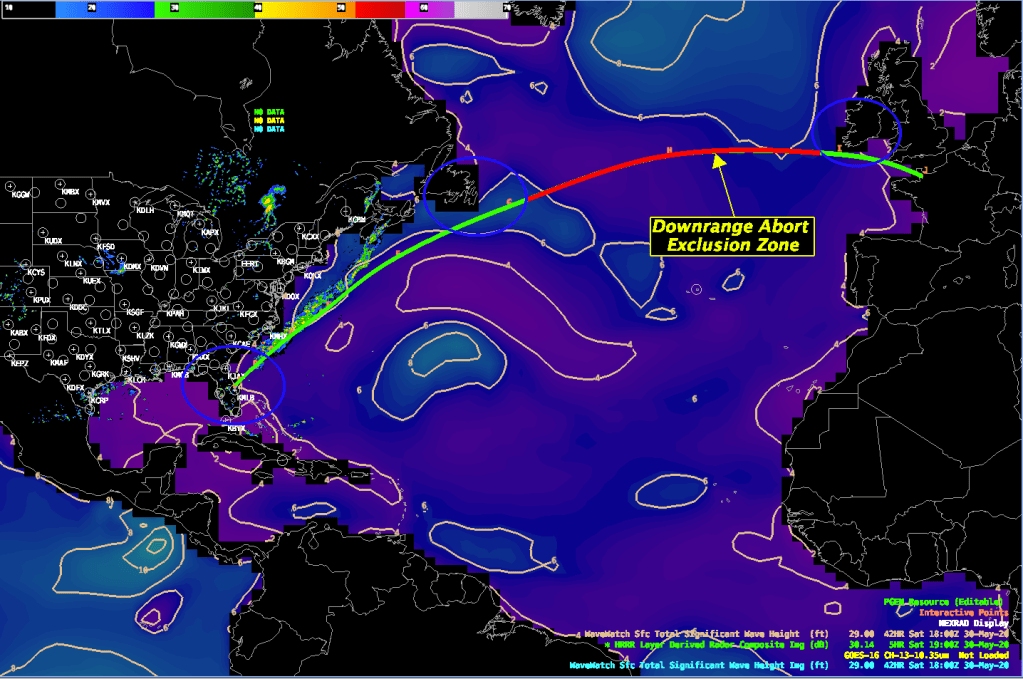
Given that, in the event of an abort, the Dragon capsule must splashdown you have to make sure that the weather is favorable for a rescue at sea. So, you have to have good weather and relatively calm seas. Also, you have to have a relatively quiescent atmosphere to come down through given that you’re flying by way of parachute. Parachuting through a thunderstorm probably wouldn’t be the most fun ride ever. The image above shows the sea state and forecast radar image at 3pm today. You’ve got relatively calm seas of 3-5′ along the eastern seaboard so that’s good. What’s less good is a line of showers and thunderstorms just off the North and South Carolina coasts. These storms are a little close to the trajectory of the rocket but just a little to the west. This may allow for the margin of safety needed in the near downrange portion of the flight. Further along, southeast of New England and Nova Scotia things look pretty good with 4-7′ seas but no major storms. There is a zone, shown in red above, where NASA would not want to see Dragon splash down due to the usually rough seas and weather over the North Atlantic Ocean. Fortunately the Dragon capsule is designed that it can turn back to the west and splash down just off of the coast of Atlantic Canada or further west just off the Irish coast. The weather in both places looks pretty good.
So, in short it looks like:
- Surface weather will be dependent on where the thunderstorms are close to launch time
- Upper level weather looks good through 10 mi up with relatively light winds and almost no wind shear.
- Downrange weather looks relatively good though there may be some thundershower activity to worry about off the SC/NC east coast.
If these parameters don’t exceed the safety thresholds, we should be go for launch. NASA says that the odds are 50-50 for a launch. Less than an hour till lift off!
 Bay State Weather